You speak to them in Punjabi. They answer in English. Every time.
It’s one of the most common things we hear from parents before they join us, and if it’s happening in your house, we want you to know two things: you haven’t failed, and it’s not too late to change it.
Why this happens (it’s not you)
Kids build a “listening” vocabulary long before a “speaking” one, that’s just how language works. But if English is the language of school, friends, and screens, it becomes the easy choice, and Punjabi quietly turns into a language they only receive, never produce. The understanding stays. The confidence to speak doesn’t get built.
It’s not a sign they don’t care about the language. It’s a sign they haven’t had enough low-pressure chances to actually use it out loud.
Why it’s worth pushing through
Speaking their heritage language isn’t just about grammar and vocabulary, it’s tied to how kids see themselves, and there’s real research behind that.
It’s a direct line to family. Studies on heritage language maintenance consistently find that a shared language strengthens communication between children and extended family, and that grandparents in particular play a central role in passing the language on (1).
It builds real identity, not just knowledge. Researchers have found that children who maintain proficiency in their heritage language tend to develop a stronger, more secure sense of ethnic identity, which is linked to higher self-esteem (2). Kids who feel comfortable in both their heritage culture and the culture around them also tend to have a broader outlook and more opportunities open to them (2).
It’s their access point to culture. Researchers describe heritage language as one of the main ways children access their heritage culture in the first place, the two reinforce each other (1). Family stories, sayings, songs, and jokes rarely translate cleanly. Understanding isn’t the same as being in it.
The cognitive benefits are real too, but they come from speaking, not just listening. Psychologist Ellen Bialystok’s research (York University) has repeatedly found that actively managing two languages strengthens attention, working memory, and cognitive flexibility in children (3). The advantage grows the more a child actually uses the language, not just hears it.
How we get kids from nodding to talking
This is exactly the gap we built Punjabi Pathways to close. Our classes for ages 4-17 aren’t lecture-style, they’re built around games, songs, and back-and-forth conversation with other kids their age, so speaking Punjabi feels like play, not a test. Small groups mean every child actually gets a turn to talk, not just listen.
One parent told us their son was sad when a session ended because “it’s so much fun.” That’s the reaction we’re aiming for, because a child who’s having fun speaking Punjabi will keep doing it.
If this sounds like your house, you’re not behind. You’re right on time.
Gurjit Pattar is the Director of Curriculum and Operations at Punjabi Pathways. She is an award winning educator with over 23 years of experience teaching at the elementary and high school levels. Gurjit holds a Master's degree in Education, specializing in curriculum and instruction. In the past, she has helped develop curriculum for the BC Ministry of Education. Gurjit has also worked with the Punjabi Language Education Association of BC, advocating for the prominence of the Punjabi language being taught in public schools alongside other languages. Her Master’s action research project focused on equipping non-native speakers in Punjabi language classrooms with the skills and confidence to speak in their heritage language. This work inspires Gurjit to create engaging and confidence building lessons that make language learning accessible and enjoyable for all students.
Founded by two passionate sisters with extensive teaching experience, Punjabi Pathways focuses on fostering a love for the Punjabi language by prioritising conversation in their online classes. Punjabi Pathways recognizes that in a globalized world where cultural diversity is celebrated, the preservation of heritage languages such as Punjabi is essential for cultural continuity and personal identity.
Punjabi Pathways emerged from a deeply personal journey to connect future generations with Punjabi language and heritage. As expert educators with over 20 years of teaching and curriculum development experience, Dr. Ranbir Kaur Johal (PhD) and Ms. Gurjit Kaur Pattar (M.Ed) realized the need for interactive, engaging Punjabi language classes for their own children. Like many parents of their generation, they had grown up speaking Punjabi and were native Punjabi speakers. However, their children, for a variety of reasons, were hesitant to speak Punjabi.
They felt a deep desire to keep their children connected to their roots and embarked on a quest to find classes that would focus on conversation. They quickly realized they were searching for classes taught in a similar fashion to their own classrooms; through games and songs with plenty of opportunities to learn Punjabi in a structured format. The lack of suitable classes became the inspiration behind Punjabi Pathways—a platform that combines education, experience, and a passion for promoting Punjabi language and culture.
In September 2020, in the midst of the COVID-19 pandemic, Ranbir and Gurjit began teaching small online Punjabi classes with some family and friends. They quickly realized there was a demand and need for this service. The two sisters put their heads together and started building a formal, structured program. Through word of mouth, Punjabi Pathways quickly grew, and years later, it now offers a variety of Punjabi classes to meet the needs of learners from around the world.
Punjabi Pathways aims to provide a platform for those who want to learn Punjabi online by offering a range of classes across ages, times, and abilities. Our dedicated team of native Punjabi speaking teachers, ensures that students learn Punjabi efficiently while also having a fun and interactive experience.
Conversation is Key
The emphasis on spoken Punjabi at Punjabi Pathways is rooted in the belief that language lives through conversation. By first focusing on speaking skills, students not only learn to communicate effectively but also forge deeper connections with their cultural roots.
Punjabi is more than just a widely spoken language; it is a gateway to a rich and vibrant culture. As the native language spoken primarily in the Punjab region of South Asia, Punjabi encompasses a rich tapestry of traditions, values, and historical narratives. To learn Punjabi is to gain access to this cultural heritage, fostering a deeper understanding of Punjabi literature, Punjabi music, Punjabi art, and social customs.
Moreover, for individuals of Punjabi descent living outside their ancestral homeland, proficiency in Punjabi serves as a vital link to their roots. It enables them to communicate with family members, engage in community events, and preserve intergenerational connections.
Many students who enroll in Punjabi Pathways no longer see Punjabi as a foreign language and find themselves able to engage in conversations with their grandparents. This connection helps build bridges and allows students to learn about their ancestors and their grandparents’ lives. It allows a piece of their history to be handed down to them and carried forward.
In a rapidly globalizing world, the ability to speak Punjabi not only honours familial legacies, but also cultivates a sense of pride in one’s heritage.
This sentiment is echoed by many of the parents whose children are enrolled in our program. Rubina, a parent, stated, “I think preserving our language is the key to preserving our culture and heritage. Kudos to you for doing this.”
At Punjabi Pathways, there is a strong belief in the transformative power of spoken language. By prioritizing conversational skills over traditional reading and writing, students not only learn to communicate confidently, but also develop a deeper connection with their heritage and community. Conversational Punjabi becomes a bridge that connects generations and preserves cultural identity.
Upon gaining confidence in their speaking skills, many students willingly continue their Punjabi learning journey through reading and writing. In this way, Punjabi language preservation continues.
Embracing Diversity
Inclusion and diversity are at the core of Punjabi Pathways values. Students from diverse backgrounds and locations across Canada, the United States, the United Kingdom, and beyond come together in virtual classrooms to learn and celebrate Punjabi culture. The company’s commitment to “Punjabi without Borders” underscores its dedication to making Punjabi accessible to all, fostering a global community united by language and culture.
Our online Punjabi classes begin with teachers greeting students with “Hello, Sat Sri Akal, Namastay, Salaam!” to set an inclusive learning environment.
Reshana, a parent with children in our Youth program, commented,
“My kids are inter-faith of Hindu & Sikh, so when I opened up your booklet on page #1, it felt amazing to see all forms of hello in Punjabi!! The acknowledgement of different ways each family may say hello (Sat Sri Akal, Namaste, Salaam) was empowering and very inclusive!! This is so HUGE to teach our kids, especially now since North America is really struggling with acceptance of all! Although, my kids were shy to say “Namaste” in a zoom call full of kids saying “Sat Sri Akal”, I tell them they really should be saying both. Our family is different and it’s important to acknowledge that.”
An Interactive and Engaging Approach
Punjabi Pathways offers more than just lessons; it provides immersive experiences that make learning Punjabi enjoyable for all ages. Drawing inspiration from research-based school curriculum techniques, lessons are infused with educational games, stimulating exercises, and immersive activities designed to make learning Punjabi enjoyable and relatable. The aim is to cultivate a genuine passion for Punjabi language and culture.
As Min, a parent of a child in our Primary program, commented,
“We appreciate you starting a program like this to help our kids learn to speak their language and unfortunately there’s nothing else out there we have found such as this!”
Reshana also stated,
“I’m so grateful that your program exists and it does in a way that incorporates lessons, games and exercises that are similar to the way children learn in their regular school curriculum! Your team makes it fun and easy to learn! You really have a special program and I wish you luck and I hope that you continue and expand your growth to reach as many children as you can because this is a very much needed niche in our culture! We appreciate you starting a program like this to help our kids learn to speak their language and unfortunately there’s nothing else out there we have found such as this.”
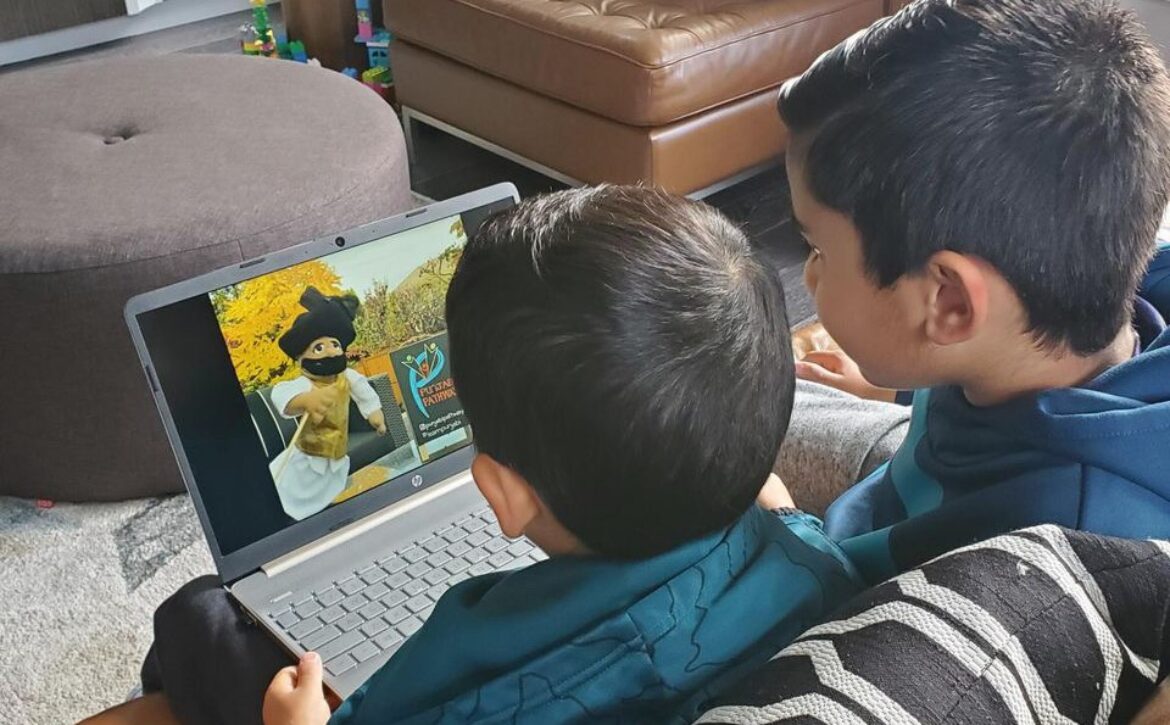
In our primary classes, our puppet, Billoo Bhaji, is used to help engage our youngest learners. He does a wonderful job engaging learners who may be shy or apprehensive at first. Soon these learners are more than willing to speak to him! He has proven quite popular with our students, helping them have a wonderful time while learning Punjabi. Parents constantly let us know how much their children love BIlloo Bhaji!
Another parent, Kul, told us, “I’m so grateful!! Amraj loves the classes and he is starting to say phrases randomly, without being asked! He also absolutely loves Billoo Bhaji :)”
The Path to Learning
In our online Punjabi classes, a special focus is given to pronunciation. Punjabi Pathways’ teachers have been trained in providing instruction on how to create sounds unique to the Punjabi language. Our lessons are crafted to help students gain confidence in their pronunciation by providing opportunities to practice speaking in class where teachers can offer formative feedback immediately. Mistakes are celebrated as a way to learn.
We often tell our students that as they learn, their brains create pathways to access the new information they are acquiring. At first, the pathway is bumpy because you are just learning. As you exercise this neural pathway by practicing your speaking and listening skills, you build muscle memory, and the pathway becomes smoother. The more you practice, the smoother the road and the faster the information can travel.
To learn Punjabi, you really only need about 10 minutes a day to practice. This can be broken into 5 minutes in the morning and 5 minutes in the evening as well. The key is to make speaking Punjabi a routine part of your day. Students are encouraged to tie speaking Punjabi to another routine part of their day. For example, it could be during bedtime or on the way to school. Mealtimes are always a great time to practice speaking Punjabi! Some families like putting on a timer for 10 minutes to have a conversation, using a combination of Punjabi and English, when they are first starting out. We call this Punglish!
One parent, Jaspreet, who’s children is enrolled in Primary classes shared with us, “We practice speaking Punjabi with her driving to and from school. Last week we were driving by a farm and I asked Dia can you tell me in Punjabi, “Aa kee aa?” She replied, “Eh farm aa! Eh corn growing farm aa.” I was so proud of her!”
Meet the Heart of Our Program. Our Educators.
Led by Dr. Johal and Ms. Pattar, Punjabi Pathways boasts a team of certified education professionals who understand the nuances of teaching Punjabi classes online. Ms. Pattar, our Operations and Curriculum Director, completed a Masters in Education degree focused on curriculum and instruction. Our Academic Director, Dr. Johal’s experience in language education informs the development of our comprehensive Punjabi language courses. Each lesson is carefully crafted to build students’ confidence and proficiency in speaking Punjabi.
The educators at Punjabi Pathways are carefully chosen and trained to deliver the Punjabi Pathways online program. They are not just instructors; they are cultural ambassadors dedicated to empowering students with the linguistic tools to navigate and appreciate the rich tapestry of Punjabi heritage while learning a new language. They have a passion for ensuring the Punjabi language lives on in the next generation and understand that their number one goal is to always ensure their students are comfortable in their learning environment.
At Punjabi Pathways, we understand that first and foremost, students must feel comfortable in their classroom before they are willing to take risks in their learning. We discuss the importance of not being afraid to make mistakes. After all, mistakes are how we learn. In an online language classroom, it can be challenging to create a cohesive learning environment but our teachers are skilled at doing so. Our lessons are crafted to help build confidence so our students come to view making mistakes as a natural part of their learning process.
Sharon’s children are enrolled in our youth classes and told us, “We’re loving it, you create a great space that’s non judgemental and very comforting for the kids to begin conversational Punjabi.”
Many of our older students come to our classes with stories of how they were ridiculed or shamed for not speaking “properly” or with an accent. Unfortunately, this meant that many simply gave up trying or were driven away. At Punjabi Pathways, we provide an encouraging environment where students with similar stories and struggles are able to learn together free of judgment and scrutiny. Our online Punjabi classes provide students with scaffolded lessons that build fluency and confidence!
Another parent, Min, commented, “My kids are finally embracing learning Punjabi. We feel that our community is always quick to judge Canadian-born kids’ attempts at speaking Punjabi, and it discourages them from even trying. You have created a fun, safe, encouraging environment where my kids are happy to log into their class each week and practice words and phrases at home.”
Jaspreet also showed appreciation by stating, “You are doing a great job in your classes! My daughter is enrolled in Punjabi Pathways and is currently in Level 3. She is slowly starting to converse with us and makes up short sentences in Punjabi!! We are happy to see this improvement in her and she is starting to feel confident as well, seeing other kids in the class who are also learning and now she doesn’t feel as if she is the only one who can’t speak Punjabi!”
Parent Reviews
The success of Punjabi Pathways is best reflected in heartfelt testimonials from parents and students alike. From hesitant beginners to confident speakers, students share stories of transformative growth in language skills and cultural connection.
Pam, a mother whose 12-year-old daughter Asha was initially hesitant to speak Punjabi, shared a heartwarming transformation she witnessed: “Thank you for instilling confidence in such a fun and safe environment. Asha spoke up and explained her day to dhadhee ji (grandmother in Punjabi), and it was priceless.”
Similarly, Vinky shared a touching moment when her daughter confidently greeted an elderly grandmother in Punjabi, showcasing the newfound language skills she acquired from Punjabi Pathways.
“We went to a friend’s house and their grandmother was there. Suhavi went up to her and said Sat Sri Akal and asked her, “Tuhada kee haal aa?” They both conversed with each other, sharing how they were doing. Suhavi ended off with “Changa fir” and left! It was so amazing to see! Thank you!”
Come Join Us!
Whether you are a heritage Punjabi speaker reconnecting with your roots, or a newcomer eager to learn, Punjabi Pathways welcomes you to join a vibrant and supportive community. Discover the joy of learning and speaking Punjabi in an encouraging environment that celebrates cultural heritage and linguistic diversity. Through live interactive classes and engaging resources, Punjabi Pathways fosters a sense of belonging and camaraderie among students.
Punjabi Pathways is not just an online language program, it’s a supportive community that nurtures pride and confidence in heritage speakers and inspires new learners to embrace Punjabi with enthusiasm.
Punjabi Pathways is much more than a language school where students learn the Punjabi alphabet or other traditionally focused endeavors; it’s a cultural sanctuary where language, heritage, and community converge. As Punjabi Pathways continues to expand and reach more students worldwide, the founders remain committed to their vision of promoting the Punjabi language and culture. Through word-of-mouth and glowing recommendations on-line, the school has garnered recognition as a leader in providing online Punjabi conversation classes. Join us on a journey of language, culture, and connection at Punjabi Pathways, where learning Punjabi is not just about speaking words but celebrating a rich cultural legacy. Embrace your Punjabi heritage and embark on a rewarding linguistic adventure with Punjabi Pathways.
Gurjit Pattar is the Director of Curriculum and Operations at Punjabi Pathways. She is an award winning educator with over 23 years of experience teaching at the elementary and high school levels. Gurjit holds a Master's degree in Education, specializing in curriculum and instruction. In the past, she has helped develop curriculum for the BC Ministry of Education. Gurjit has also worked with the Punjabi Language Education Association of BC, advocating for the prominence of the Punjabi language being taught in public schools alongside other languages. Her Master’s action research project focused on equipping non-native speakers in Punjabi language classrooms with the skills and confidence to speak in their heritage language. This work inspires Gurjit to create engaging and confidence building lessons that make language learning accessible and enjoyable for all students.
Hi! We use cookies to ensure that we give you the best experience on our website. If you continue to use this site, we will assume that you are happy with it.
This website uses cookies to improve your experience while you navigate through the website. Out of these cookies, the cookies that are categorized as necessary are stored on your browser as they are essential for the working of basic functionalities of the website. We also use third-party cookies that help us analyze and understand how you use this website. These cookies will be stored in your browser only with your consent. You also have the option to opt-out of these cookies. But opting out of some of these cookies may have an effect on your browsing experience.
Necessary cookies are absolutely essential for the website to function properly. These cookies ensure basic functionalities and security features of the website, anonymously.
Cookie
Duration
Description
cookielawinfo-checkbox-analytics
11 months
This cookie is set by GDPR Cookie Consent plugin. The cookie is used to store the user consent for the cookies in the category "Analytics".
cookielawinfo-checkbox-functional
11 months
The cookie is set by GDPR cookie consent to record the user consent for the cookies in the category "Functional".
cookielawinfo-checkbox-necessary
11 months
This cookie is set by GDPR Cookie Consent plugin. The cookies is used to store the user consent for the cookies in the category "Necessary".
cookielawinfo-checkbox-others
11 months
This cookie is set by GDPR Cookie Consent plugin. The cookie is used to store the user consent for the cookies in the category "Other.
cookielawinfo-checkbox-performance
11 months
This cookie is set by GDPR Cookie Consent plugin. The cookie is used to store the user consent for the cookies in the category "Performance".
viewed_cookie_policy
11 months
The cookie is set by the GDPR Cookie Consent plugin and is used to store whether or not user has consented to the use of cookies. It does not store any personal data.
Functional cookies help to perform certain functionalities like sharing the content of the website on social media platforms, collect feedbacks, and other third-party features.
Performance cookies are used to understand and analyze the key performance indexes of the website which helps in delivering a better user experience for the visitors.
Analytical cookies are used to understand how visitors interact with the website. These cookies help provide information on metrics the number of visitors, bounce rate, traffic source, etc.
Advertisement cookies are used to provide visitors with relevant ads and marketing campaigns. These cookies track visitors across websites and collect information to provide customized ads.